You check what customers recognise you by and what they lose if that element disappears, and you get the answer from the people who buy from you. Your team sees the brand every day and judges it differently from a customer in a hurry.
The 2009 Tropicana case shows what happens when the question comes after the launch. A Romanian example from 2010 shows another check, a simpler one, that is worth making beforehand.
What happened at Tropicana
In January 2009, PepsiCo, the company that owned Tropicana at the time, started shipping Pure Premium orange juice in a new carton, designed by Peter Arnell’s agency.
The old carton had shown an orange with a straw stuck in it for many years. The new packaging removed it and put a tall glass of juice in its place, stretched along the side of the carton.
Customers reacted quickly. The American public broadcaster NPR reported that some wrote to the company saying the new carton looked like a store brand, while others called it ugly. NPR also quoted an executive of the company, who told The New York Times that he had underestimated customers’ emotional bond with the old packaging.
The return to the old carton was announced on 23 February 2009, less than two months after the launch. The numbers appeared only afterwards.
What the 20% figure tells you
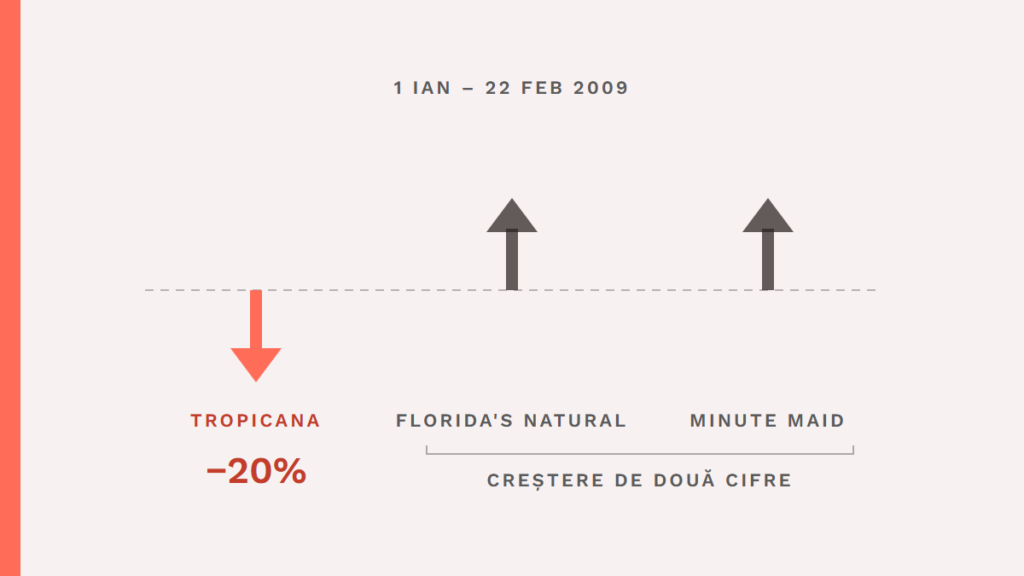
On 2 April 2009, Ad Age published data from IRI, a firm that measures store sales. Between 1 January and 22 February 2009, Pure Premium sales fell by 20% in units.
Over the same period, Florida’s Natural and Minute Maid, two direct competitors, grew by double digits in units sold. Fortune magazine repeated these data in November 2024, when customers criticised a new Tropicana bottle.
The 20% figure turns up often in presentations about packaging, usually as proof that the new packaging cost sales. Here I would slow down a little. A marketing belief becomes fact only after you have tried to disprove it.
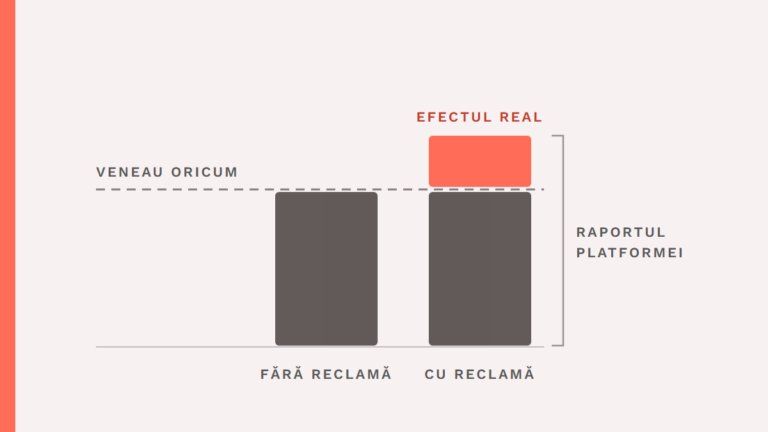
The window is seven weeks long, and the figure alone does not separate the packaging from other possible causes: price, in-store promotions or what competitors did in those weeks. I have not found public data that separates them. What I did find are three independent signals pointing the same way: customer complaints, Tropicana’s fall and the competitors’ growth in the same window.
Three signals that match make the packaging explanation very likely. It is still a deduction, though, and the difference matters when you judge your own numbers.
What Tropicana had actually changed
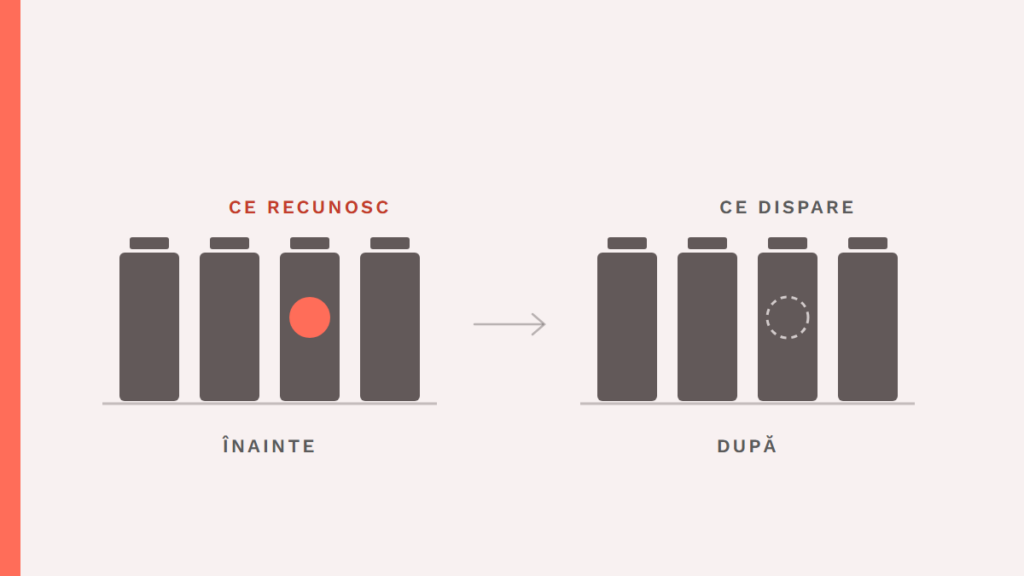
Jenni Romaniuk, a researcher at the Ehrenberg-Bass Institute, wrote a whole book about such elements, “Building Distinctive Brand Assets” (Oxford University Press, 2018). Distinctive brand assets are the elements by which buyers recognise a brand without reading its name: a colour, a shape, a symbol, a character.
The orange with the straw was one such element. At the shelf, a person picks juice in a few seconds and looks for the sign they know, without reading labels. When the sign disappears, the buyer searches for longer, doubts they have picked up the right product or takes the carton next to it.
I do not know what tests the team ran before the launch and I do not want to guess. The result still shows a confusion of perspective: for the team, the carton was a design problem, and for the buyer it was the shortest road to their product.
The leaf in “Explore the Carpathian Garden”
In July 2010, the ministry then responsible for tourism launched Romania’s tourism brand, “Explore the Carpathian Garden”, at the Shanghai World Expo. Even before the launch, a few Romanian bloggers noticed that part of the logo resembles the logo of a British company, Change Transport.
Then the Belgian designer Tom Nulens told the press that the drawing of the leaf in the logo was his. He had sold it to the stock image library iStockphoto, which sells images from independent authors to anyone who pays for the licence.
The ministry stopped payments to the company that had made the brand until the situation was clarified. The company said the resemblance was a coincidence.
The case differs from Tropicana, but the underlying question is the same. An element becomes a distinctive asset only if it points to a single brand, and an image that anyone can buy cannot point only to you. The check was simple and could have been done before the launch: where the element comes from and who else uses it.
What to ask before you change the logo, packaging, colour or name
You can ask the questions below in a one-hour meeting, before you pay for the first drawing. Some need answers from customers, and the team cannot give those in their place.
1. What do customers recognise us by? Show them the packaging, the website or the shop window without the name and ask whose it is. What they recognise is what you risk losing.
2. Where do they look for us, and how much time do they have? A shopper at the shelf has a few seconds, while a customer comparing offers on a laptop has a whole evening. The shorter the time, the more the old signs matter.
3. What problem does the change solve? Write the problem in one sentence, next to the fact that shows it. If the only reason is that it “looks dated” and only the team says so, ask the customers too.
4. What do we keep from what exists? You can change the letterforms and keep the colour, or clean up the drawing and keep the symbol. A change made in steps shows you at each step what happened.
5. Is the new element ours alone? Check where each image comes from, what rights you have over it and whether anyone else uses it. For a name, check registered trademarks too, before you print anything.
6. How do we find out quickly if it went badly? Choose in advance the figure you track and the threshold at which you stop. Decided after the launch, the threshold moves easily.
7. What does the way back cost us? Tropicana was able to return to the old carton within a few weeks. A company that has changed its illuminated signs, vehicles and uniforms has much less room to turn back.
What to take away
Before you change something your customers recognise, find out what they find you by and whether the new element is yours alone. Take the answers from customers, before the launch. Treat any spectacular figure, including the 20% at Tropicana, as a hypothesis you try to disprove.
Brand Mentors
I work with companies through Brand Mentors
There I do brand strategy and consulting, starting from consumer psychology. You will find the services on brandmentors.ro.
Go to Brand Mentors