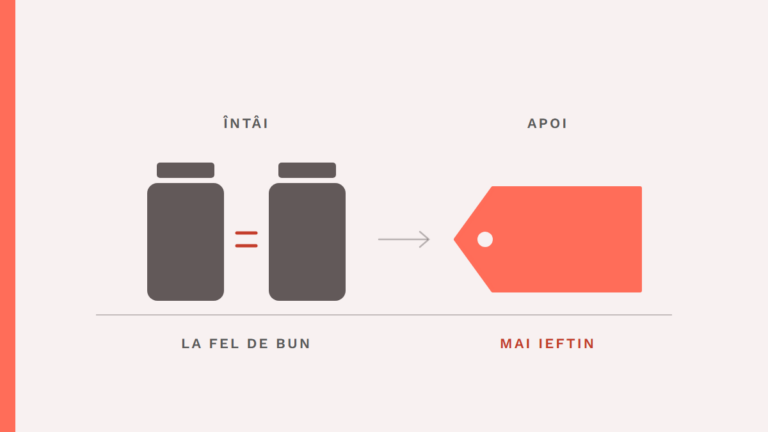
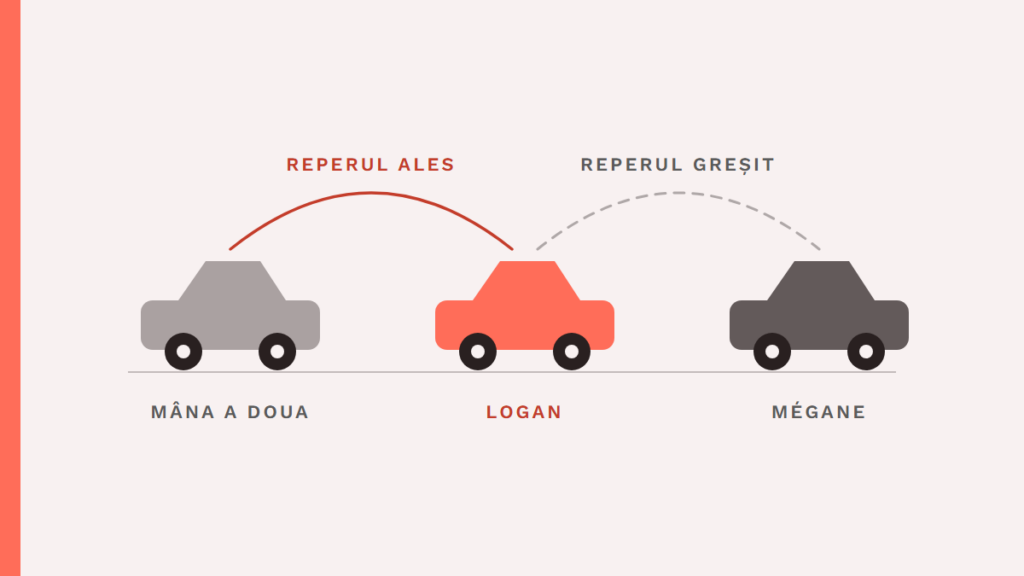
You can be very cheap as long as the client compares you with the weaker option they would have bought anyway, and you give them what that option lacks. The Dacia Logan was designed for the person who would otherwise have bought a second-hand car, and next to one, the Logan looked like a win.
A low price becomes suspect when the client sets it beside the wrong product. Choosing the benchmark is therefore the first brand decision, before any advert.
1. The car the Logan was compared with
Louis Schweitzer, head of the Renault Group, and Constantin Stroe, then president of Dacia, called the Logan “the impossible car” and “the 5,000-euro car”. In 2024, twenty years after the September 2004 launch, Ziarul Financiar recalled that the car was conceived from the start to have a more attractive price than a second-hand car.
From that sentence you learn the benchmark. The Logan was compared with the car a few years old that a family would have bought from a private seller, after reading adverts for a whole month.
Against that car, the Logan had things on its side that the client understood without explanation: it was new, it came from the factory and had no past you had to guess at. In that comparison, the low price gave the client a reason to close the adverts.
2. What the Logan kept from a more expensive car
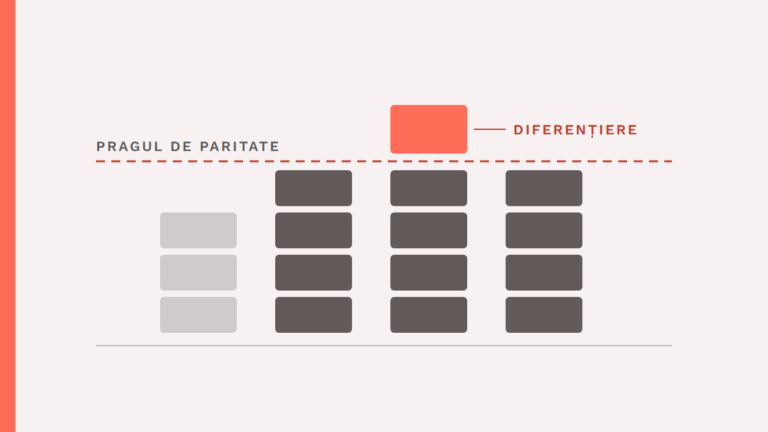
A client can always read a low price as a sign of poor quality, so the Logan needed things they could check for themselves. In the language of the trade, a point of parity is what you must have to enter the category, and a point of difference is what gets you chosen within it.
The British magazine AM wrote in October 2004 that the Logan used the underpinnings of the Renault Modus and was as big, outside and inside, as a Renault Mégane. Size and mechanics were the parity, meaning the things a buyer compares first, by eye and with a tape measure.
I explained both ideas at length in the article on the point of parity and the point of difference. Here I look at how a company that fixed its price before it designed the car split them.
3. Parity changes from one market to another
The same AM article has a detail that I read as a lesson about parity. The base version, with a 1.4-litre petrol engine, cost 5,000 euros, while in Western Europe the cost rose to 7,500 euros. The difference came from ABS, power steering and airbags, fitted as standard.
Renault had designed the 5,000-euro model for emerging markets. In Western Europe, ABS and airbags were the minimum without which the car did not even make the client’s list, so Renault added them and accepted a price 50% higher.
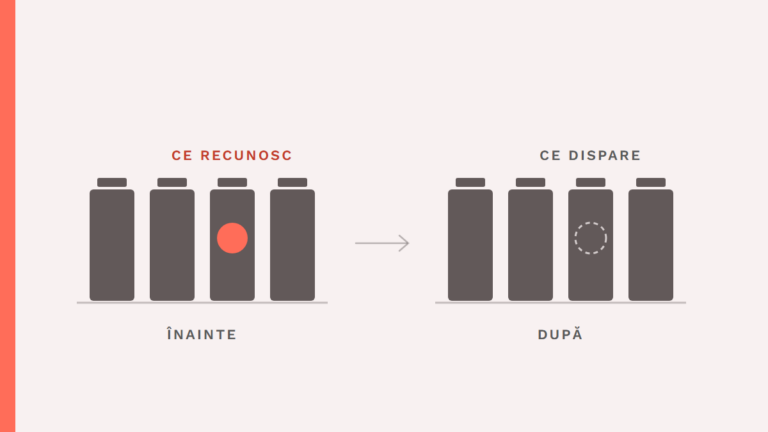
The client writes the list of parity points, according to the market they buy in. If you cut from it to reach a price, the client sees a product that is missing from the category, and the low price confirms their suspicion.
4. What happened once the price had won trust
In the 20 years since the launch, nearly 600,000 Logans have been sold in Romania, according to the figure in the same ZF article. The Sandero, the brand’s small model, was in 2021 the best-selling model in Europe among private buyers, for the fifth year running, with 226,825 units, according to Dacia’s press release of January 2022.
The same release gives a more interesting figure for our topic: 70% of Sanderos were sold in the Stepway version, and 60% of Duster customers chose the Prestige trim. Dacia writes that the range draws more and more customers towards the best-equipped versions.
In the first half of 2024, JATO Dynamics data cited by Motoring Research showed that the Sandero became, for the first time, the best-selling car in Europe across all channels, with 143,596 units, ahead of the Volkswagen Golf. Also in 2024, ZF noted that cars worth more than 30,000 euros, such as the best-equipped Duster versions, are built at Mioveni.
The brand started from the second-hand benchmark and climbed from there, model after model. The order seems to have mattered: first it showed that cheap can also mean solid, then it asked for more.
5. How to choose the benchmark in your business
The rule I propose for this topic goes like this: “The client puts you on the list for what you have in common with the others and chooses you for what only you have.” When you sell cheap, the benchmark the client compares you with decides what goes on that list.
The first step is to name the weaker option your client would choose if you did not exist. For the Logan it was the second-hand car. For a made-to-measure furniture firm with low prices, the benchmark may be ready-made furniture from the big store, and for a cheap accounting practice it may be an accountant who works without a contract.
The second step is to list the things the client asks of every option in the category, even a cheap one. Ask a few real clients what they check before they pay, because their answer is more precise than what you would assume at your desk.
The third step is to cut only what is not on the list. The Logan in Western Europe shows the rule in practice: when the client’s list changed, the equipment changed, and the price with it.
The last step is to state the benchmark openly, in words the client can repeat. Schweitzer’s formula named only the price, and the comparison with a second-hand car was made by the client, because they knew what one cost.
What to take away
A low price looks weak only next to the wrong benchmark. Dacia chose the second-hand car as its benchmark, kept what the client asked of any new car, and added equipment where the market demanded it. First choose the option the client compares you with, then cut only what is not on their list.
Brand Mentors
I work with companies through Brand Mentors
There I do brand strategy and consulting, starting from consumer psychology. You will find the services on brandmentors.ro.
Go to Brand Mentors