When the shelf puts you in the wrong category, you keep one place the shelf cannot take from you: the pack the customer holds before paying. AQUA Carpatica Flavours used that place in 2023 and made the wrong label the subject of its launch.
You do not always choose the category you sit in. Sometimes the law chooses it, sometimes a retail chain’s buyer does, and the customer judges you by your shelf neighbours before reading anything on the pack.
1. How a mineral water ended up next to cola
In September 2023, AQUA Carpatica launched AQUA Carpatica Flavours, a sparkling natural mineral water with fruit juice and a touch of agave syrup, in 330 ml cans and four flavours. Revista Biz published the announcement on 7 September 2023.
The problem came from the law. Valentina Vesler, who ran communication at AQUA Carpatica at the time, said Romania had no category for flavoured natural mineral water, so the product could legally sit only among carbonated soft drinks.
The entry that the agency Cohn & Jansen filed at the Golden Drum festival describes what followed on the shelf. The authorities classed the drink as “soda”, and the can landed on the same shelf as carbonated drinks such as Coca-Cola.
2. What the shelf fixes for you
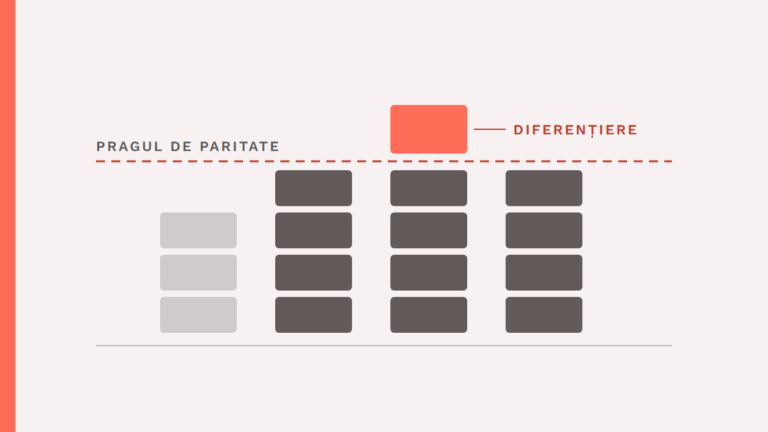
Your spot on the shelf tells the customer what to compare you with, and we forget this when we write a marketing plan. In the trade, points of parity are what you need to enter a category, and points of difference are what gets you chosen within it.
Whoever moves you into a category also changes your parity list. Next to cola, shoppers compare a can with what they know about cola, and the spring water AQUA Carpatica had put at the centre of its brand has no place in that comparison.
For AQUA Carpatica, the move was awkward. Revista Biz recalled that, from the launch of the brand, AQUA Carpatica had been the one that questioned nitrates in water and the truth of labels.
I explained the two ideas at length in the article on points of parity and points of difference. Here I look at what you do when someone else fixes your category and you cannot change it.
3. A launch with its back turned
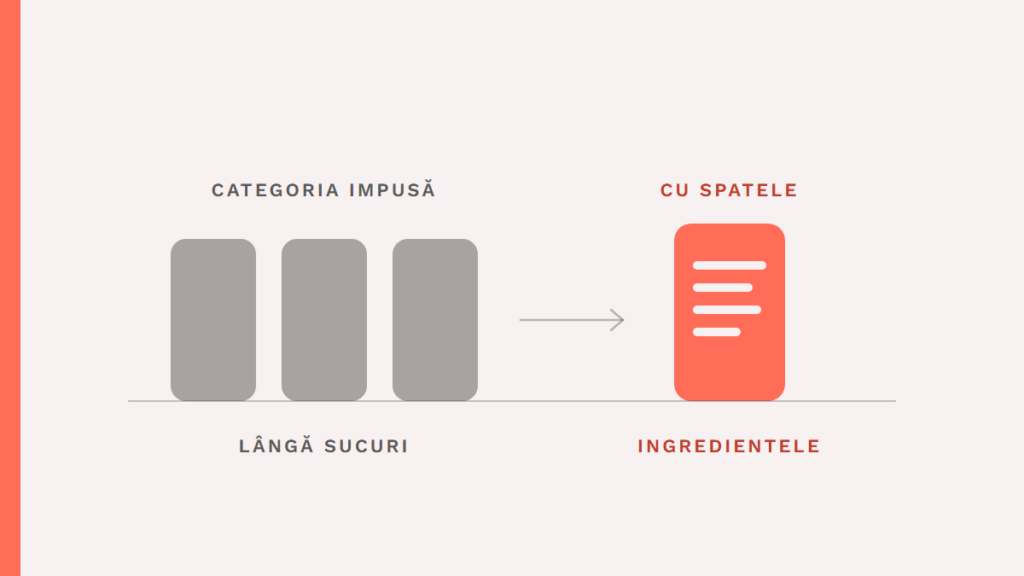
The company answered by turning the product’s back to the customer. Revista Biz presented it as the first product in Romania launched on the shelf with the back label facing out, the side of the can that carries the ingredients.
Vesler gave the reason: “it is better to read the ingredients first”. Founder Jean Valvis said in the same piece that the company dissociates itself from the carbonated drinks category, because that category does not represent it.
The Golden Drum entry adds the film. The pack took on, one by one, the shapes of the products the can could just as well have sat next to on the shelf, and the campaign message was “stop wrong labeling”.
The agency writes that it wanted people to look past the shelf spot and the pack and check what is inside. I read this move as a lesson about parity: the company accepted the shelf it could not change and moved the comparison to the ingredients, where a mineral water with juice looks different from an ordinary soft drink.
4. What the Effie jury recognised
In June 2024, the “Wrong Labelling” campaign won the only Grand Effie of the edition, according to Revista Biz. The same article notes a Gold in non-alcoholic drinks, and the jury named Cohn & Jansen Agency of the Year.
The public summary on effie.ro, written by the campaign team, says the product opened a new type of drink in Romania, sparkling flavoured water. In the same text, the team writes that the launch started conversations in several social media communities.
The public summary gives no sales figures, so I cannot give them here either. The award tells me the jury saw results, and for the topic of this article the mechanism matters more.
5. What to do at your company when the shelf puts you in the wrong place
The rule I propose for this topic goes like this: “Customers put you on the list for what you share with the others and choose you for what only you have.” When the shelf puts you in a foreign category, that category writes the list, and you decide what to do with it.
The first step is to check where customers put you today: the store shelf, the filter on a website, the section in an ordering platform. Visit three stores or open three platforms and write down which products you sit next to.
The second step is to write the parity list of the imposed category, as customers see it there. Ask a few real customers what they compare first, because their answer shows you where you lose without knowing it.
The third step is to pick one thing customers can check for themselves, on the spot, that takes you out of the wrong comparison. For AQUA Carpatica, it was the ingredient list, printed on every can anyway.
The fourth step is to name the problem out loud. The company talked about the wrong label instead of hiding it, and the problem became the launch story, with a message customers could repeat.
For an artisan bakery placed in the supermarket next to sliced bread, that thing can be the short ingredient list on the bag. For accounting software that a comparison site lists among free apps, it can be what the customer gets on the day they have a problem. I wrote about how to say you are as good and still different in the article about Aldi.
What to remember
The shelf tells customers who to compare you with, and sometimes the law or a chain’s buyer picks the shelf. AQUA Carpatica Flavours accepted the imposed category and moved the comparison to the ingredients, right on the can. First find out who customers put you next to, then pick one thing they can check for themselves.
Brand Mentors
I work with companies through Brand Mentors
There I do brand strategy and consulting, starting from consumer psychology. You will find the services on brandmentors.ro.
Go to Brand Mentors