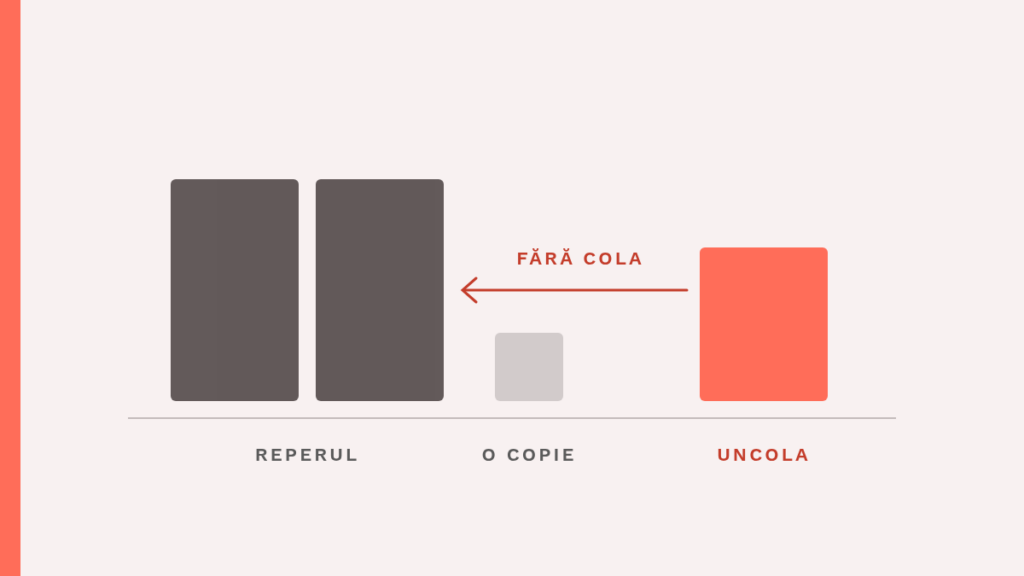
Positioning against the category pays off when the client knows the category well and, at least from time to time, feels like stepping out of it. That is how 7-Up worked in 1968, when it began to call itself “Uncola”. The name first said what was missing from the bottle.
Al Ries and Jack Trout took the case as an example in 1972, in the article “The Positioning Era Cometh” in Advertising Age. There they explained positioning, the place a brand holds in the client’s mind, through several campaigns of the day. Nine years later their idea became the book “Positioning: The Battle for Your Mind”, published by McGraw-Hill in 1981.
1. What buyers thought 7-Up was
Towards the end of the 1960s, most buyers saw 7-Up as a drink to mix into cocktails or a remedy for an upset stomach. That is how the blog of the Rubenstein Library at Duke University describes the situation, in an article about the campaign.
The firm’s management wanted something else. It wanted 7-Up to sit in people’s minds next to Pepsi and Coca-Cola, among the soft drinks you drink at any time, with a meal or on the road, and for that it called in a team from the Chicago office of the agency J. Walter Thompson.
The problem looked like an advertising one. In the buyer’s mind, the place of soft drinks was taken by two cola brands, and a third drink that resembled them would have received, at best, a reserve seat that nobody asks for.
A small firm often runs into the same problem. You do accounting, custom furniture or software for restaurants, and the client puts you on a shelf of their own choosing before they read your offer. That shelf already has two or three occupants they know.
2. What “Uncola” said
The agency team left cola alone and used it as a reference point. 7-Up became “Uncola”, the soft drink that is not cola, and the idea caught on mostly with young people, the same Duke article writes.
In the best-known TV spots appeared Geoffrey Holder, a dancer and actor from Trinidad, who held kola nuts in one hand and a yellow lemon and a green lime in the other, which he called “Uncola nuts”. The difference between the two hands carried the whole message. The rest was decoration.
Ries and Trout admitted in 1972, in translation, that the idea “looks silly until you look closer”. Then they explained the mechanism: by tying the product to what already existed in the buyer’s mind, the “Un-Cola” position made Seven-Up an alternative to the cola drink. They also wrote that sales rose “by something like 10%” in the first year, an estimate of their own that I have not found confirmed by the company.
3. Why a big category helps you
The client puts anything new next to something they know. Ries and Trout noted that Coca-Cola held the cola position firmly, and that was exactly the position in the mind of anyone buying a soft drink. A person who heard “Uncola” understood two things at once: what the drink is compared with and what it lacks.
The move has an economy that a small firm can use. The client already knows the category, and you tell them only where you stand relative to it. It costs you one line.
In return, opposition demands discipline. Once you have chosen the reference point, all your texts, from the site to the offer to the phone pitch, relate to it, and you do not change it every quarter after the competition has launched something.
For this topic I keep a sentence at hand: “Positioning begins with the alternatives you leave behind, not with the slogan you write.” At 7-Up, the alternative left behind had a name that everybody knew.
Think about what this means for you. If your client chooses among three big firms that resemble one another, you can tell them what you lack out of what tires them about those firms: the long deadlines, the twenty-page contract, the person who changes with every phone call.
4. Where the power of positioning against ends
The position held for a while. According to the same Duke article, 7-Up’s market share fell in the 1970s, as Sprite took ground from it. In the 1990s, a financial analyst called it the drink that older people drink.
In 1998, the company dropped the “Uncola” slogan. I do not know how much of the blame the position bears for this decline, and the figures I have do not separate the campaign from distribution, price or competition. It would be easy to draw a conclusion from them and it would be wrong.
What I do know is what a position built on what you are not leaves open. Any rival that is not cola either can say, in other words, the same thing, and the client no longer has a reason to choose you among those who refused the same category. This is where it breaks.
“Uncola” said clearly what is missing. It said less about what you get in exchange, and the brand has to fill that place with something that belongs only to it.
5. What to check before you define yourself by opposition
Is the category big enough? Opposition works only against something the client knows without explanations. If you must first explain the category you contradict, you have two messages to deliver and a budget for one.
Does the client want to step out of it? Look for the reason in what clients who left the category leaders say: what tired them, what they missed, what they tried before they reached you. Without a real reason, “anti” stays a picture.
What are you after you have said what you are not? Write one sentence about what the client gets from you, with no comparison at all. If the sentence cannot stand on its own, positioning against carries you only until a competitor says the same thing louder or cheaper.
Did you clarify the brand before the ads? My rule is short: “A brand gets clear before any campaign.” The story from Duke begins with a brand question, where 7-Up stands in people’s minds, and reaches the ads with the kola nuts after the question had received an answer.
Say you have a cleaning firm for offices and your market is full of big firms with teams that change monthly. You can be “the firm that does not change your people”. It works only if you first put into contracts and salaries what it takes for people to stay, and only if you can say in one sentence what else the client gets besides the same team.
What to take away
Positioning against the category borrows the strength of a reference point the client already has in mind. 7-Up used cola as the reference point and defined itself in people’s minds through it. The place holds as long as you also have a sentence about what you offer, separate from what you reject.
Brand Mentors
I work with companies through Brand Mentors
There I do brand strategy and consulting, starting from consumer psychology. You will find the services on brandmentors.ro.
Go to Brand Mentors