You turn second place into a reason to choose when you tie it to something the customer gets. Avis did that in 1962 with three words, “We Try Harder.” The company said openly that it was number two in the market and showed the customer what they gain from that.
The case is more than sixty years old, and the situation behind it repeats in almost every market in Romania. Most categories have a leader, and most firms sit behind that leader. For them, the question in the title is a working question.
1. Where Avis stood
Avis was the second car-rental firm in the United States and was losing share to the leader, Hertz. Print magazine writes that the firm had been losing money for 15 years. Its president, Robert Townsend, asked Bill Bernbach, from the Doyle Dane Bernbach (DDB) agency, to change how people saw it.
The situation may sound familiar if you have a larger competitor, with a thicker ad budget and with the name the customer says first. The first impulse is to look just as big. The customer can tell you are not, and the attempt costs you the credibility you already had.
2. What the agency found
Lester Blumenthal, the account man at DDB, explained at the time where the campaign started: “All of our research and theirs showed that the one thing really unique about Avis was that it was No. 2 in its field.” In plain terms, all the research, the agency’s and the client’s, showed that the only thing truly distinctive about Avis was second place.
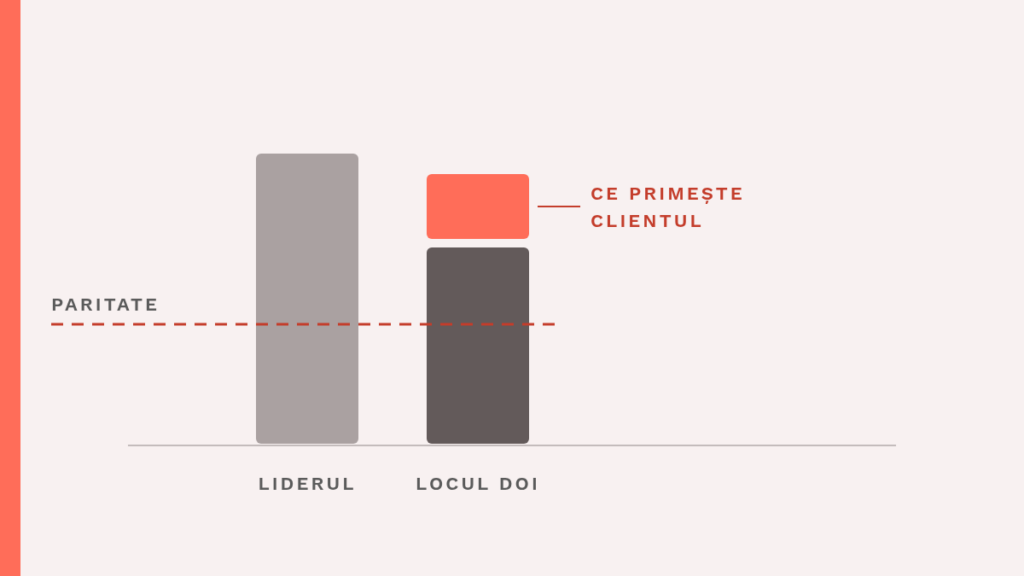
Blumenthal’s sentence does not mention the cars or the prices. When you rent a car, you expect a clean one, a price close to the others, and someone who hands you the keys without keeping you an hour at the counter. Those are points of parity: what you must have to enter the category.
Parity gets you on the customer’s list, but it does not give them a reason to choose you. Avis needed that reason and found it in a fact most firms would have hidden.
3. How second place becomes a promise
Second place, said alone, sounds like weakness. The slogan “We Try Harder” ties it to a behaviour: the firm that is not first has to work harder to keep its customers. The customer hears a promise about how they will be served.
That is the gap between a confession and a point of difference. The confession says where you stand in the ranking. The point of difference says what the customer gets from that, and that is what they can use when they choose.
The customer puts you on the list for what you have in common with the others and chooses you for what only you have. Avis played the second half of that sentence, with something Hertz, as the leader, could not say about itself.
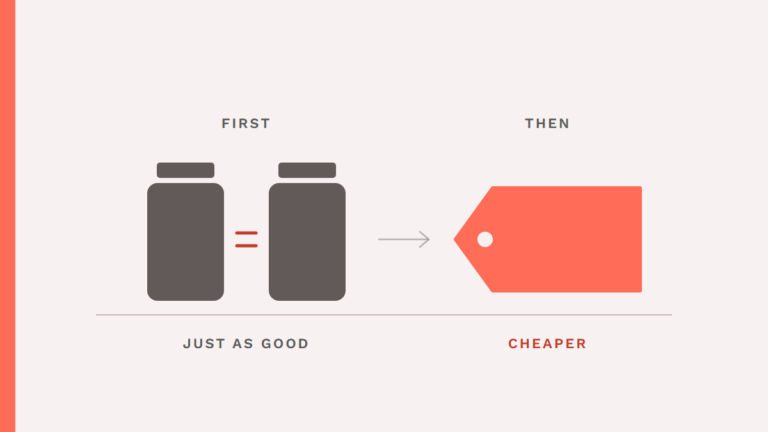
The confession does something else too: it makes the rest of the message credible. When a firm says on its own what it does not have, the customer finds it easier to believe what it says about what it does have. I wrote about the same order in the article about Aldi: first you show you are just as good, then you say why you are different.
4. The test the campaign failed
Print writes that “We Try Harder” scored poorly in audience tests, because half of those asked did not like it. Bernbach answered, according to the same magazine: “But half the people did, and that’s the half we want. Let’s go with it.” In other words: the other half liked it, that is the half we want, we go ahead.
For a number-two firm, Bernbach’s answer matters more than the slogan. Any difference said clearly pushes away people who wanted something else. You need the customers who recognise themselves in your promise, and the leader already has those who choose out of habit.
A message that tries to please everyone ends up looking like the leader’s. Then the customer picks the original.
5. What followed
Print writes that Avis moved into profit almost overnight, and the Wikipedia page on Bernbach talks about the shift from loss to profit in a single year. Exact sums circulate on blogs, but without a primary source, so I leave them out.
The slogan entered everyday speech and ended up on lapel badges. Avis kept it for 50 years, until the 2012 brand change, when it moved to “It’s Your Space”.
6. What you take from this for your firm
Write on a sheet, one per line, the facts that hold you back: second place, the small team, the short range. Next to each, note what the customer gets from it. Some lines stay empty, and one or two give you a reason to choose.
Take, for example, an imaginary five-person plumbing firm competing with one of fifty. The small team can mean that the person who takes your call is the same person who comes to your home. Said that way, the fact becomes something the customer understands and weighs.
Then check the points of parity. If you lack something anyone in the category expects, no sentence about effort puts you on the customer’s list. The distinction at length is in the article on points of parity and points of difference.
Order matters here too, and my position is simple: “A brand is clarified before any campaign.” At Avis, the research showed first what only the firm had, and the slogan came after.
The last step is the hardest to hold. A promise of effort is checked by the customer at every contact with the firm, so you write it only if your team can keep it every day.
What to keep
Second place becomes a reason to choose when you tie it to something the customer gets. Cover the points of parity first, then say openly what only you have, and accept that part of the audience will not like you.
Brand Mentors
I work with companies through Brand Mentors
There I do brand strategy and consulting, starting from consumer psychology. You will find the services on brandmentors.ro.
Go to Brand Mentors