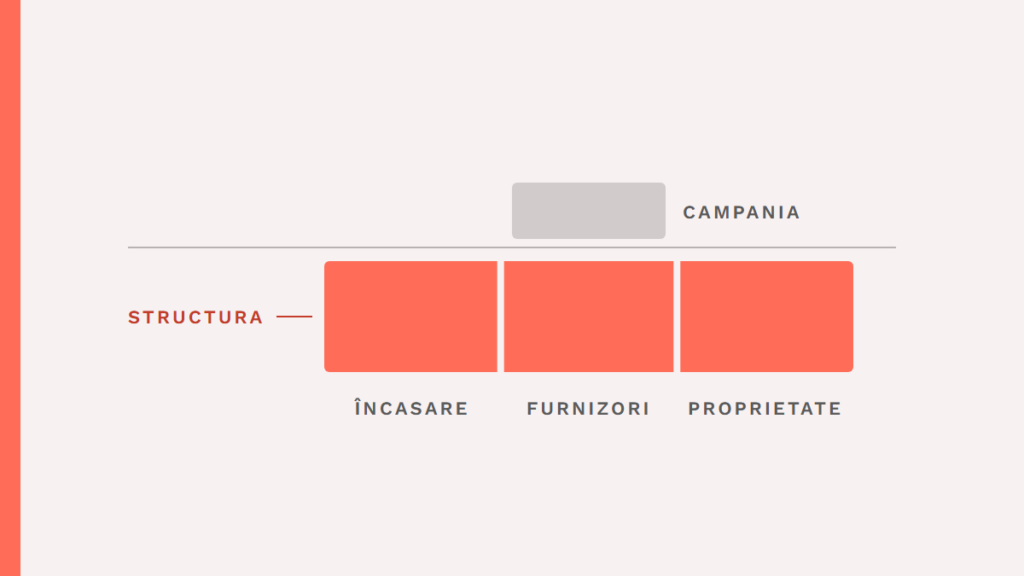
An advantage competitors cannot buy usually sits in the structure of the firm: in how it collects its money, where it gets its goods and what it owns. The campaign is the part you see first, but it is also the easiest part to copy.
I picked three firms that show the idea from three different angles: Costco, Inditex with its Zara brand, and Dedeman. The facts come from Costco’s annual report, from Inditex’s FAQ page and from the Romanian business press.
Costco collects before it sells
Costco started in 1983, in Seattle, and sells in large warehouses on an annual membership. In the US, the basic membership costs $65 a year. That is what the company says in its annual report for the fiscal year ended 30 August 2026.
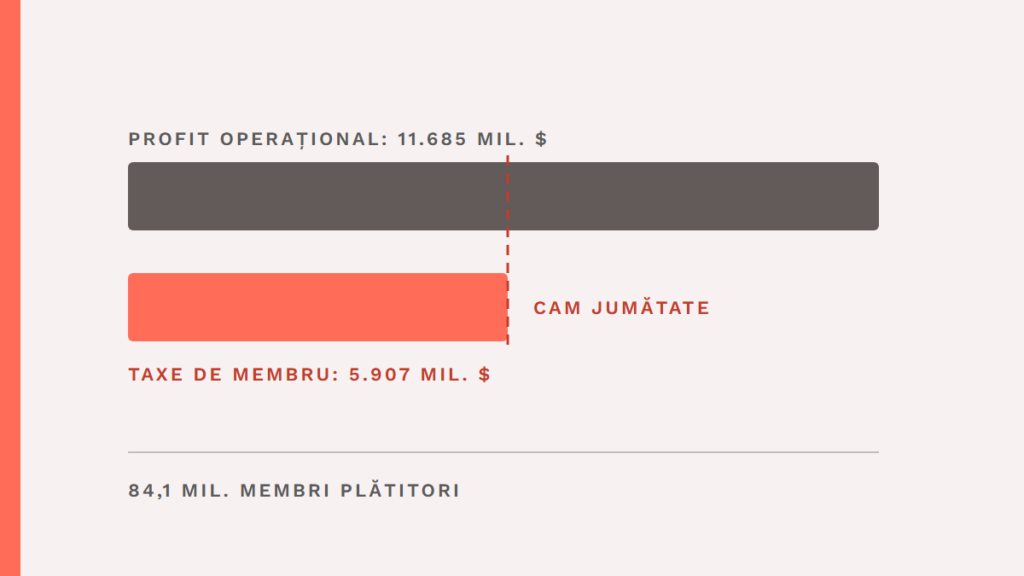
I take three figures from the same report. Membership fees brought in $5,907 million, 11% more than the year before, and at year end the firm had 84.1 million paying members. The renewal rate was 92.3% in the US and Canada and 89.8% worldwide.
The fourth figure comes from a simple division, which I do myself. Operating income for the year was $11,685 million, so membership fees are worth about half of it.
Costco describes its own logic in the report. The firm offers low prices on a limited selection of products, so that it sells high volumes and turns its stock quickly, and its warehouses are fitted out simply, because customers come for quality and price. In the same place, the firm writes that the membership format keeps its merchandise losses far below those of an ordinary store.
A competitor can cut prices from tomorrow morning. To copy Costco, it would need tens of millions of people who pay before they buy and who come back every year. A base like that builds up over years of low prices, and no advertising budget produces it in one quarter.
Zara keeps its suppliers close
Inditex, the group that Zara belongs to, explains on its FAQ page how it organises production. For each new model, a design family orders only a few thousand pieces. At the start of the season, the group commits to a small amount of stock and adjusts along the way, according to customer demand.
Small orders work because a significant number of factories operate close to the headquarters in Spain. Inditex writes that the clothes most tied to current fashion come from suppliers in nearby areas or from the group’s 11 own factories in Spain, and that the nearby suppliers are mainly in Spain, Portugal, Turkey and Morocco. Products less tied to fashion are ordered further ahead.
All production goes through the logistics centres that each brand has in Spain, and from there it leaves for stores worldwide twice a week. Every shipment brings new models. Inditex writes that from the moment an order reaches the distribution centre to the moment it reaches the store, it takes on average 36 hours in Europe and at most 48 hours in America or Asia.
On the same page, the group says it does not advertise to push demand. I read the frequent deliveries as a reason to visit, because the customer has something new to see on every pass through the store.
A competitor can copy a dress from Zara’s window. To copy the rhythm, it would have to move its suppliers closer, build its logistics centres and accept small orders at the start of the season.
Dedeman owns the buildings it sells in
Dragoș Pavăl, co-founder and chairman of Dedeman, said in an interview for Capital on 18 November 2025 that the company owns all of its real estate assets. He links this to stability and to better cost control. In the same interview, he says the firm brought essential services in house.
The firm’s figures for 2024, published by Economedia, are a turnover of 12.29 billion lei and a net profit of 1.64 billion lei. Divided out, that gives a little over 13 lei of net profit for every 100 lei sold.
From the public figures, I cannot say how much of the profit comes from the firm owning its buildings. I can say what ownership changes: a store in a building the firm owns does not depend on a lease that gets renegotiated. For a chain of large stores, that is a cost the firm controls on its own.
A competitor does not buy land and put up large stores in a few months. It needs capital, years of work and a decision taken long before the need appears.
What the three firms have in common
None of these advantages sits in a campaign, and each one sits in a structural choice that the customer does not see directly. At Costco it is how the firm collects money, at Zara it is where the goods come from, and at Dedeman it is what the firm owns.
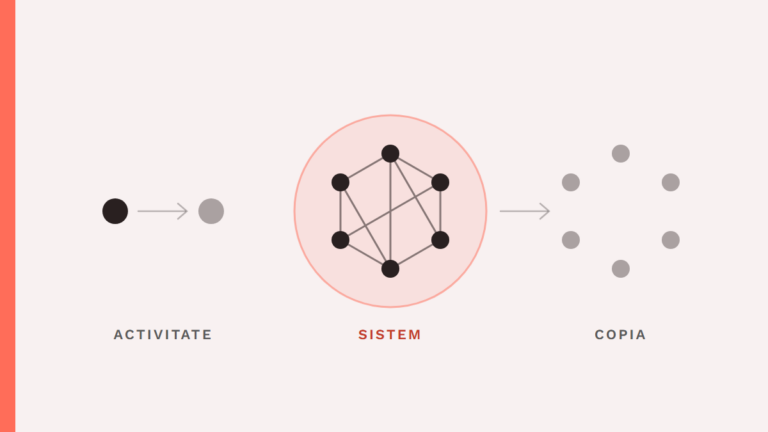
There is one more thing I see in all three cases, and it seems to me the most important of all. “A competitor can copy one of your activities easily. Copying the way your activities hold each other up is hard.”
That is how I read the links in the cases above. At Costco, low prices bring customers back, and the prepaid membership keeps prices low. At Zara, nearby suppliers allow small orders, and small orders allow new models in every shipment.
What you can do in a small firm
You do not need Costco’s size to think the same way. Take a sheet of paper and answer three questions for your own firm.
How do you get paid? Think about whether a customer can pay once a year, or in advance, for something they use repeatedly: maintenance, a service package, access to a workshop. Money collected in advance buys you time, and the customer has a reason to come back.
Where do your resources come from? A nearby supplier that delivers small quantities quickly lets you order a little and try several variants. A distant one, cheaper per piece, forces you to guess demand months ahead.
What do you own? Look at what you built yourself and what a competitor would have to build from scratch: a space, a piece of equipment, your own client list, a written working method. Whatever you rent or borrow, someone else can rent too.
Then draw lines between the answers. Look for places where one choice supports another, for example a local supplier that allows a fast service, for which the customer pays a subscription. That is the part a competitor can see but cannot take piece by piece.
What to remember
Hard-to-copy advantages sit in how the firm collects money, where it gets its goods and what it owns. A campaign gets copied in a month, while a structure takes years to build. For your firm, the useful question is which of your choices support each other.
Brand Mentors
I work with companies through Brand Mentors
There I do brand strategy and consulting, starting from consumer psychology. You will find the services on brandmentors.ro.
Go to Brand Mentors