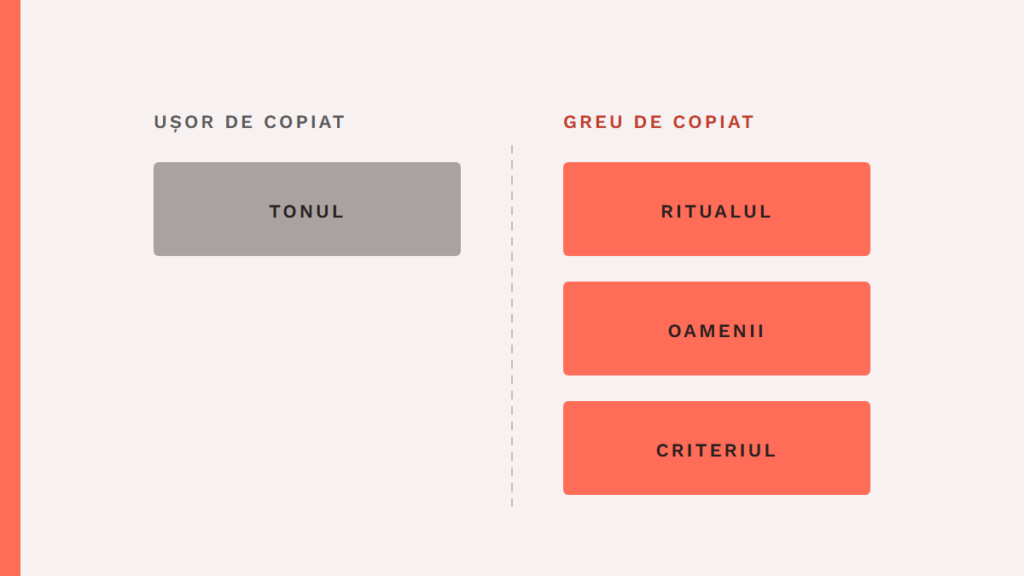
A competitor can copy Liquid Death’s tone and jokes. The ritual, the people who keep it going and the criterion used to pick ideas are much harder to copy.
1. What the report says
The story comes from the report “Frontier CMO: 7 lessons for CMOs in the AI era”, built on the podcast of Joshua Spanier, vice president for AI and marketing strategy at Google. The source sells AI and YouTube. The accounts in the report come from the guests and the companies, with no public methodology.
Benoit Vatere, Chief Media & Digital Commerce Officer at Liquid Death, spoke in the episode recorded live at Cannes Lions 2026. The episode page on Think with Google says the brand works without a brand book, the document that fixes the logo, the colours and the tone, without advertising agencies and without creative briefs.
The report adds a detail on page 9: every Thursday, for four hours without phones, comedy writers and producers work on a single question, namely what is the silliest and funniest thing they could do to win the internet for a day. Thursday does not appear on the episode’s public page. It remains the report’s claim.
2. The criterion in the meeting
Vatere says, in the report, that an idea must pass two tests: it must be unexpected and it must be funny. Then he adds a condition: the joke must be able to carry the product and the brand, otherwise it does not bring awareness. Funny for its own sake does not get in.
The criterion is short and it rejects ideas. Whoever hears it knows right away what has no place in the meeting. A long guide does not get there, because every page allows an exception.
The people in the meeting are the second piece. In 2024, Dan Murphy, senior vice president of marketing at Liquid Death, told Modern Retail that the creative group is made up of writers from Adult Swim, from film and from The Onion, with no classic marketing training. They work in a writers’ room, a writing team that sits together at the same table.
3. What is easy to copy
The tone shows in every public clip. The jokes can be counted, listed and imitated by anyone with a sense of humour.
A competitor can also make funny ads, but a copied joke comes without the filter that picked it from many others and without the people who judge it. The report does not say how many ideas get rejected on an ordinary Thursday. All we know is that the meeting has a criterion by which an idea can be rejected.
You copy easily what can be seen from outside. Write it on a list: tone, jokes, clip formats, packaging. Nothing on the list requires having gone through a meeting.
The copy looks like the original. Whoever imitates only the surface gets a clip with nothing of the reason the original was chosen.
Try this on a brand you admire: write in one column what can be seen from outside and in another what you would need to know to do the same. The second column shows how hard it is to copy.
4. What cannot be copied
The ritual costs time, every week. Four hours without phones for a group of people paid to write means a fixed monthly sum, which you pay even when nothing good comes out. Whoever copies the Thursday meeting has to hold it week after week.
People cannot be copied. You do not move a comedy writer who worked at The Onion to a competitor with a post. A group that learned to write together cannot be rebuilt overnight from people hired separately.
The clear criterion can be copied only on paper. The words “unexpected and funny” can be written on any wall, but the judgement that applies them to a specific idea lives in the heads of people who have worked together long enough to choose the same way.
A competitor copies one of your activities easily, but copies with difficulty the way your activities hold each other up. The meeting, the people and the criterion are three activities that lean on one another. The difference is covered in the article Why competitors copy activities, not systems.
5. When it works without a brand book
Having no brand book works only when the strategy is already in the team’s head. Otherwise, the Thursday meeting produces jokes without a brand.
The argument comes from Vatere’s criterion: to judge whether a joke can carry the product and the brand, you must know what the brand is. The document is missing, so the knowledge must exist in the people in the meeting.
For a small company, a short test: ask three people on the team to write separately, in one sentence, what the company would never do, without consulting each other and without looking at the website. If the answers differ, you need a shared text before you give up any document. You can also read about a clear refusal as an advantage in What do you gain when you skip Black Friday?.
If the three answers match, the criterion already exists in the team’s head, even if it is not written anywhere. The test has a limit, though: three answers do not prove a strategy. They only show whether the people on the team say the same thing about the company.
A bigger limit remains. No public figures were found on how much the meeting mattered compared with other levers, and the report gives no methodology. The reading above starts from what Vatere and Murphy said, without a measurement.
What to take away
The visible part gets copied. Tone and jokes are copied fast, while the ritual, the people and the clear criterion come together and hold each other up, which is why they are hard to copy. Give up the brand book only after the strategy sits in the team’s head.
Brand Mentors
I work with companies through Brand Mentors
There I do brand strategy and consulting, starting from consumer psychology. You will find the services on brandmentors.ro.
Go to Brand Mentors