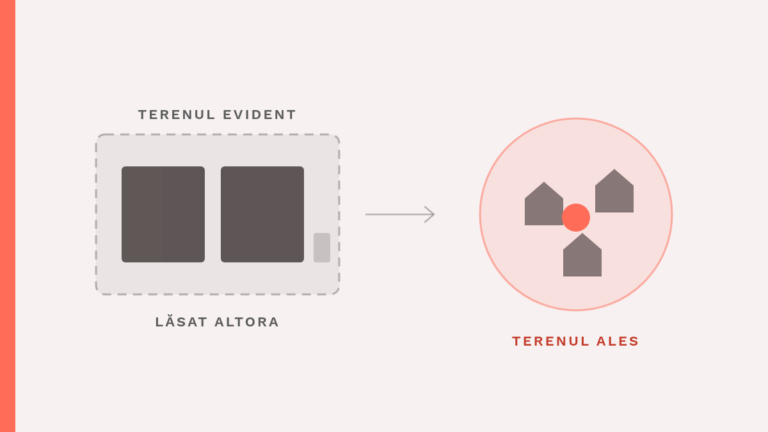
The client compares you with what they would do if your firm did not exist, and their list does not match the competitor list in your sales deck. On their list sits a spreadsheet. Sometimes the habit of leaving things as they are sits there too.
That is where positioning starts: the place the brand holds in the client’s mind. The client gives you that place by comparing you with something they already know. If you pick the wrong comparison point, you build a difference against a rival the client never considered.
1. The question April Dunford starts from
April Dunford spent 25 years as a marketing director across a string of startups, young firms built to grow fast. She wrote the book “Obviously Awesome”, on product positioning.
In March 2021, Dunford published a short guide to the method on her site, and the first step in the guide is a question: what would the client do if your offer did not exist? She calls the answers “competitive alternatives”.
The question moves your eyes off firms that look like yours and onto the person with a problem to solve. That person has an option. Sometimes their option is to buy nothing.
2. The five pieces, in their order
The method has five pieces: the competitive alternatives, what you have that the alternatives lack, what the client gains from that difference, the clients who care most about that gain, and the market category where the difference shows up most. Dunford works them in that order. Each piece rests on the one before it.
The order has a clear logic, because a word like “different” needs a term of comparison. Without alternatives, your list of differences turns into a list of qualities. The client reads it and never learns what you are better than.
Dunford writes that for two years she thought positioning had no starting point. Then she saw that the starting point had to be the competitive alternatives. Her reason: she kept meeting positionings that sounded fine in the office and failed with clients, because they were not differentiated.
3. What makes the alternatives list
Dunford gives software examples: a spreadsheet, a process done by hand, or an intern hired to do the work. She groups them under “do nothing”, the path where the client sticks with how they solve the problem today. She writes that in business software you lose 25% of sales to “no decision”, the client who chooses nobody.
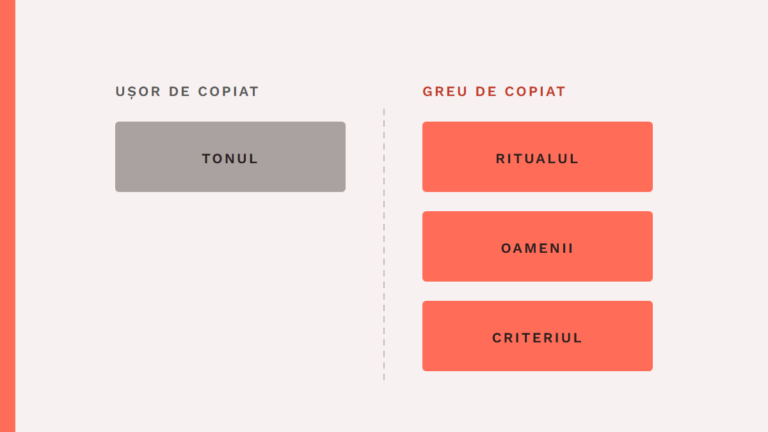
Her conclusion is that positioning has to set you against how things get done now, if you want the client to move. Think of a small accounting firm. On the client’s list sits the founder who gathers invoices into a folder each evening and once a month takes them to someone they know.
The accounting firm competes with that folder and with the lost evenings, and the prices of other firms in town matter only after that. If its ads talk only about rates lower than the competition, the founder with the folder does not see themselves in them. They are not comparing accounting firms yet.
4. Phantom competitors
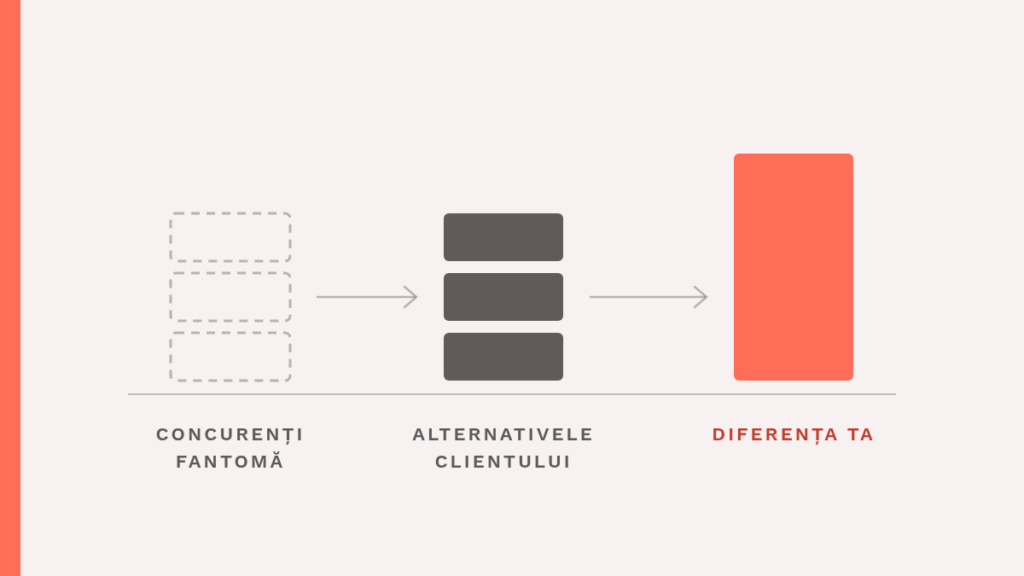
The second trap in Dunford’s guide has a name: “phantom competitors”. She describes them as firms that could, on paper, compete with you, yet you never meet them in deals and you never lose to them. When you build your positioning against them, Dunford writes, you weaken it.
The phantom list often comes from desk research, with a search engine open. Dunford says the first step is not a test of your internet research skills. The fact that a firm could compete with you does not mean it will.
She does not ask you to forget those firms. The product team can watch them as a future threat, and you adjust your positioning on the day you meet them in deals.
One of my beliefs fits here: “One hour with five real clients tells you more than a day of brainstorming in a meeting.” Brainstorming, the meeting where the team throws out ideas, gives you the theoretical rival list. The client tells you what they tried before they looked for you.
5. The Janna Systems case
Dunford tells the story of Janna Systems, a firm she worked at that sold a CRM for large companies. A CRM is the software a firm uses to keep track of its client relationships. At every client meeting, the team got the same question: “How are you better than Siebel?”
The figures Dunford gives show why the question was hard. Siebel Systems had 8,000 employees, revenue of $2 billion and 400 clients, while Janna had a few dozen employees, under $2 million and 6 clients. On the field of “CRM for large companies”, the comparison was lost from the start.
One of the firm’s differences was how the software modelled relationships between people. A deal with an investment bank showed what that difference was for: sales teams could see who knew whom and who shaped a decision. Investment banks work on relationships, and the firm chose them as its target market.
The firm repositioned as “CRM for Investment Banks” and moved sales and marketing into that field. Dunford writes that over the next 18 months revenue grew from under $2 million to almost $80 million. The figures are hers.
The product stayed the same, and the alternative in the client’s mind changed. For the bank, Siebel became the general tool, and Janna the tool built for how that bank works. Positioning starts with the alternatives you leave behind, not with the slogan you write.
6. How to build your alternatives list
Call five clients who chose you in the past year and ask what they did before they found you. Then ask what they would have done if they had not found you. Write the answers as they say them, including “nothing” or “we managed with a spreadsheet”.
Cut from the list any firm no client named, even if it shows up in every market analysis you have done. Keep those firms in a separate note. Bring them back when clients start naming them.
For each alternative left, write what you have that it does not. From there you move to what the client gains from the difference and to the clients who care most about that gain. I wrote about how you show you are as good and still different in an article on points of parity.
What to remember
The client compares you with what they would do without you, and on their list sits a spreadsheet, an intern or the choice to buy nothing. Get the alternatives from clients, cut the phantom competitors and build the difference against what stays on the list.
Brand Mentors
I work with companies through Brand Mentors
There I do brand strategy and consulting, starting from consumer psychology. You will find the services on brandmentors.ro.
Go to Brand Mentors