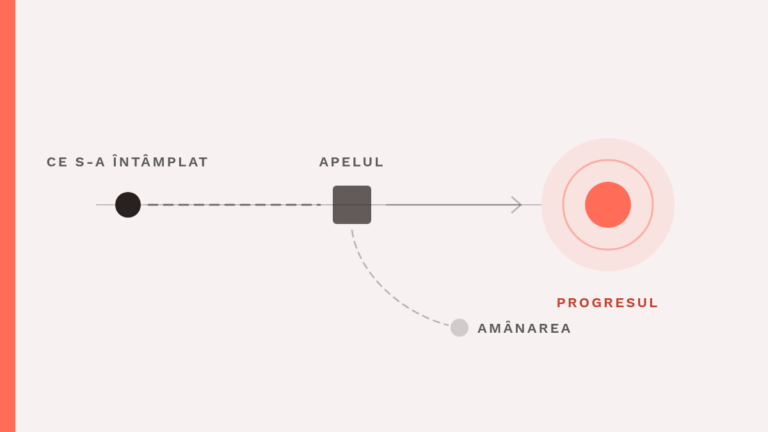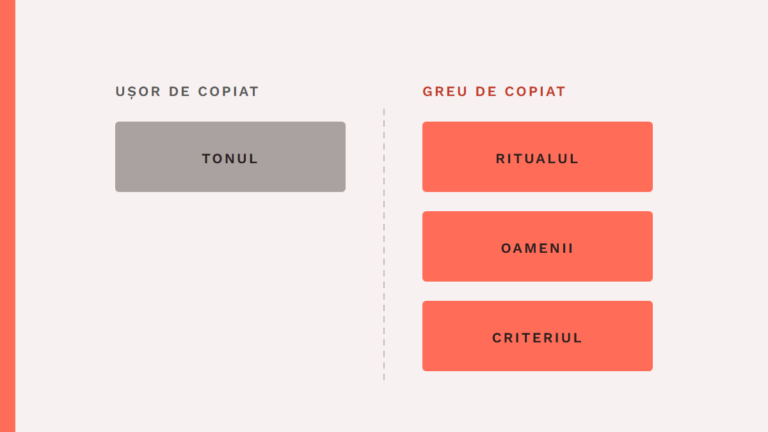
The request is the sentence the client walks in with, and the job is the progress in their life they try to finish, which you learn from the purchase story. To tell them apart, you ask the person to walk you through what happened, step by step.
Marketing calls this work Jobs-to-be-Done, the progress the client seeks when they buy. I covered the frame itself in the article on what customers look for when they buy. Here I stay with the interview, the tool that pulls the job out of people who already bought.
I take two cases from Jobs-to-be-Done Radio, the episodes where Bob Moesta and Chris Spiek discuss real interviews. The two of them built the four-forces model as part of their interview method.
1. What the request tells you and what it leaves out
The client usually describes the product they picture: a bag in a certain colour, a site with three pages, a stronger vacuum. The description is honest and useful. It comes after the person has already decided what problem they have and what the fix looks like.
The job (JTBD) sits one step earlier, in the situation that put the person on the road. The client does not buy only your product. They buy the progress they make with it.
The gap shows up inside the firm, because the request tells you what to deliver, and the job shows why the person chooses you and what could stop them at the last moment. If you work only from the request, you compete with everyone else on details anyone can match.
2. The bag with the pink lining
Alesya Bags, a South Carolina firm that makes expensive laptop bags for women in leadership roles, asked for interviews with its clients. Chris Spiek tells one of them. A woman had been picked from a large group for a future-leaders programme, and she heard the news in her boss’s office.
The programme meant a three-week trip, so she started to wonder how she would carry her things: in a handbag, in a laptop bag or in a backpack. She had bought bags online before and sent them back. About a month before departure, two weekends were already taken, so she had two free ones left to choose.
The bag she bought had a pink lining, and in the interview she says she never liked pink. Spiek tells how she accepted it, with a simple argument: nobody will see the inside. Later she said she likes pink a little now, though she would have preferred a green interior.
If you had asked her before the purchase, she would have said she wanted a bag without pink. The request would have been correct and would have told you too little about what decided the buy. The job sat with the programme: she wanted to leave ready for three weeks that moved her up in the firm, before her weekends ran out.
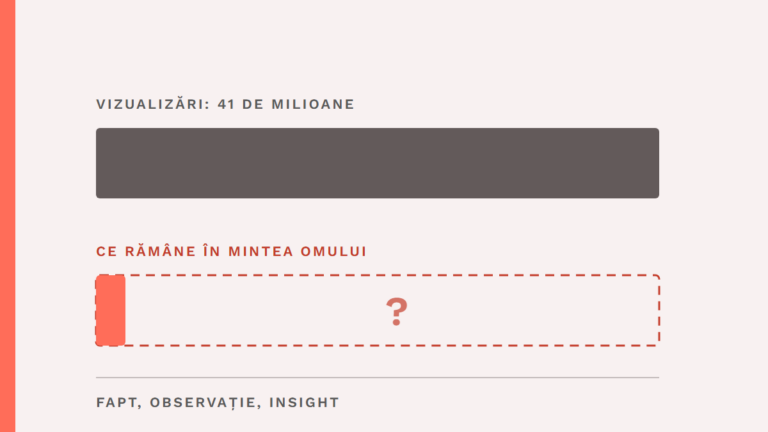
Spiek says, in the episode on pull and anxiety, that “for 90% of the story there is no pull”. The bag won near the end, because it could be a laptop bag and an evening bag at the same time.
3. The four forces behind a purchase
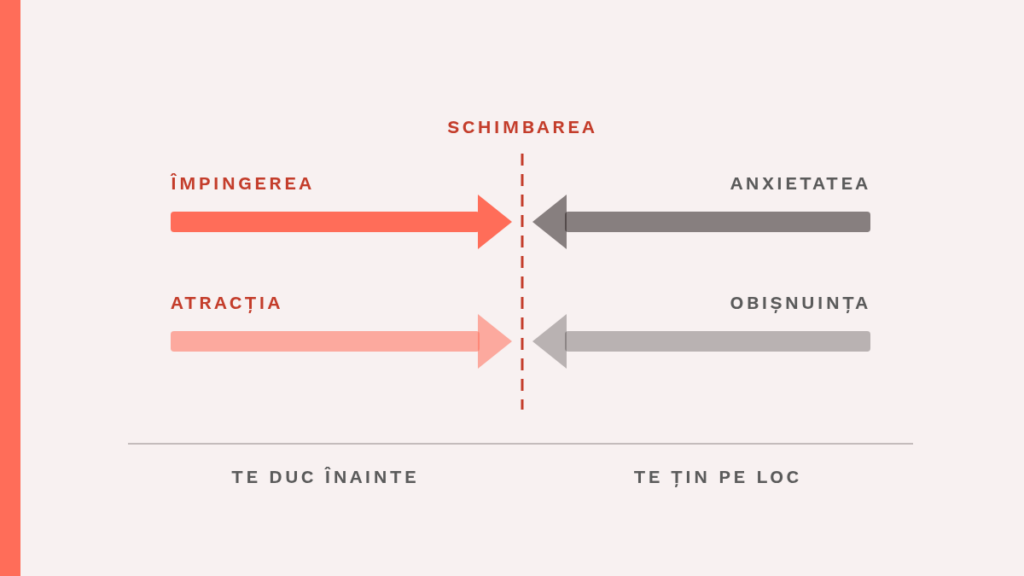
Moesta and Spiek describe every change as a balance of four forces. Two push the person toward the new option, and two keep them where they are.
Push is the problem with the current situation. For the bag, push came from the trip and the deadline.
Pull is the magnetism of the new option. For the bag, pull was that you can wear it by day and by night.
Anxiety is the fear of the unknown, the question “What if it fails?”. Habit is the comfortable inertia of things the person already knows and does.
On their site, the rule shows up as an inequality: the client switches only when push and pull, taken together, pass anxiety and habit. The same page says a product that is only more attractive loses if the client is uneasy or feels comfortable where they are.
The client’s request almost always talks about pull, the product they want. You hear the other three forces only when the person tells you the full story.
4. The vacuum brought out on Saturday morning
In another episode, Spiek and Moesta tell the interview with a man who waited about 12 months before buying a Roomba, the robot vacuum. He did the research at night, on a laptop, after the children went to bed. Moesta notes the wife’s reason: the children enjoyed the robot and tidied the whole room before they started it.
Around minute 45 of the interview, as Spiek remembers it, the story opened. The man said that, in a week when his wife was out of town, he brought out the Dyson vacuum on Saturday morning. Moesta gives his conclusion: “The Roomba is fine, but it doesn’t do everything my Dyson does.”
A satisfaction survey would have placed this man among clients happy with the robot. Habit with the old vacuum came out after three quarters of an hour of story. On the gap between what the client says and what they do, I also wrote in the article on what your client won’t tell you.
5. How you run the interview
1. Talk to people who already bought
Pick clients who paid recently, while they still remember places, people and dates. Someone who only thinks about buying describes wishes, while a person who paid can tell you what happened.
2. Rebuild the timeline
Start from the first thought about the purchase and walk to the day of payment, with questions about places, people and deadlines. For the bag, the thread started in the boss’s office and passed through the two free weekends. Without a timeline, you would have been left with a colour preference.
3. Ask about the brakes
Ask what nearly stopped the person and what they did to calm the fear. In the episode on pull and anxiety, Spiek quotes clients who say they thought it through and knew they could return the product. Fear rarely shows up in the request, and a return policy can answer it before any ad.
4. Collect more stories
On the bag with the pink lining, Moesta and Spiek say themselves that one interview is not enough for conclusions. The rule I sign here: “An hour with five real clients says more than a day of brainstorming in a meeting.” Brainstorming, the meeting where the team throws ideas, gives you the request as the team imagines it.
After a few interviews, put the stories side by side and look for what repeats in push and in the brakes. That is the job you have to serve, and you fit the product and the offer to it.
What to keep
The request shows the product the client pictures, and the job shows what they try to finish. To find it, rebuild the purchase story with people who already bought, from the first thought to payment. Listen above all to push, fear and the old habit, because the request talks almost only about pull.
Brand Mentors
I work with companies through Brand Mentors
There I do brand strategy and consulting, starting from consumer psychology. You will find the services on brandmentors.ro.
Go to Brand Mentors